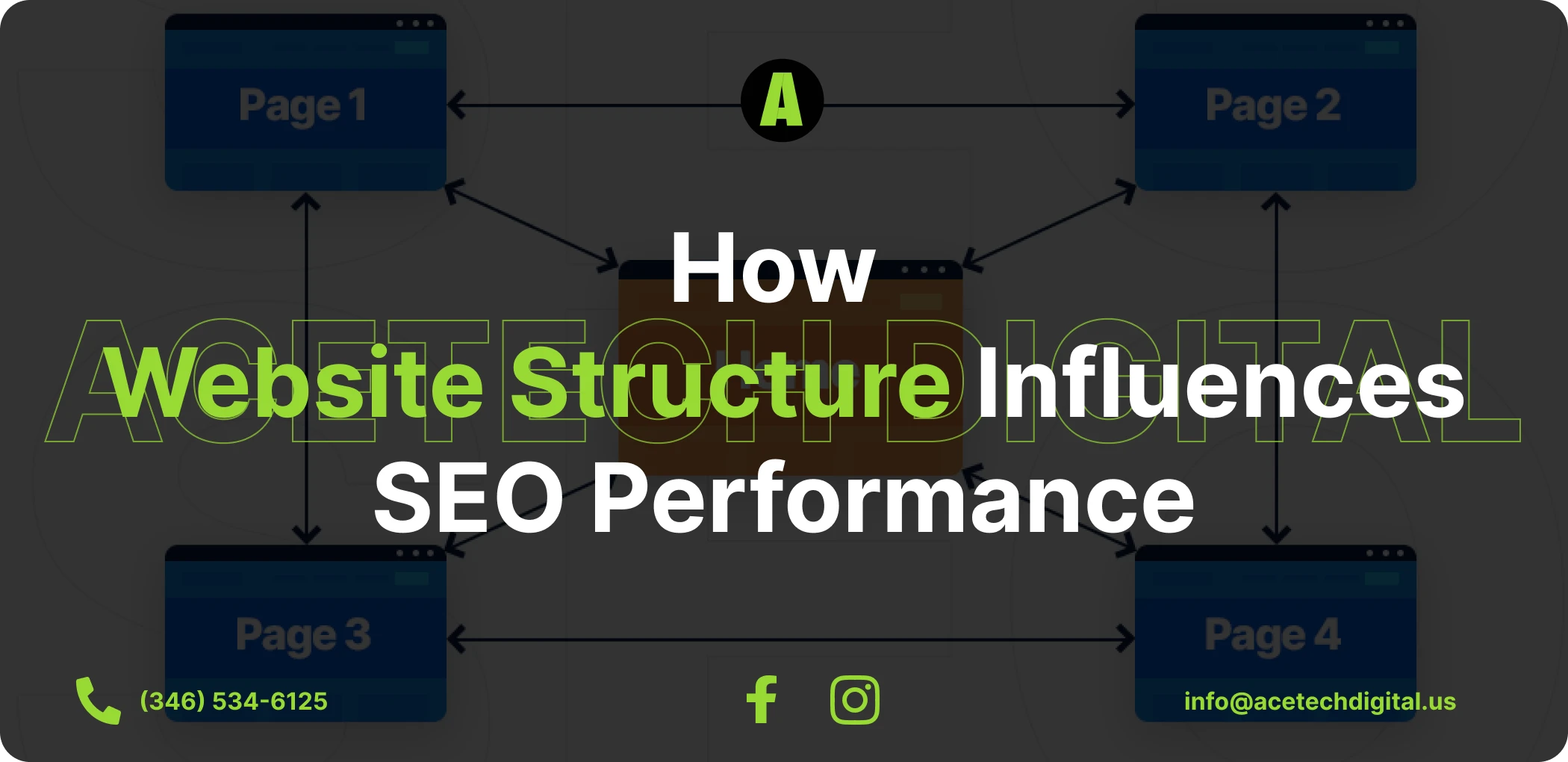
Website structure refers to how you organize and connect the pages on your site. It creates a framework that helps visitors find information and tells search engines which pages hold the most importance. When you plan your layout carefully, you make it much easier for search algorithms to understand what your business does and who it serves.
Search engines depend heavily on this organization to discover new content and rank it appropriately. Without a logical arrangement, crawlers struggle to find your best pages. Many sites fail to reach their full potential simply because of poor architecture. They might have great articles, but a confusing layout prevents them from ranking well in search results.
What Website Structure Means
Website structure forms the foundation of your digital presence. It involves the hierarchy of your content, the navigation menus you build, and the relationship between every single page. A good setup ensures that anyone visiting your site can figure out exactly where they need to go next. The architecture creates a clear map from your Homepage to your most specific articles.
When you organize your site properly, you build a logical grouping of topics. Search engines look at these groupings to figure out the primary subject of your website. If your content sits in random places without clear connections, search bots will struggle to categorize your business accurately.
Understanding Page Hierarchy
Page hierarchy acts like a tree branching out from a single trunk. The homepage serves as the main trunk, providing the strongest starting point. From there, your main service pages branch out, offering broad categories of information. Finally, supporting content and detailed articles form the smaller branches and leaves, adding depth to the main topics.
Why Hierarchy Helps Search Engines
A strong hierarchy helps search engines understand content relationships and topic signals. When a search crawler sees several detailed articles linking back to a main category page, it recognizes that category page as an authoritative source on the topic. You can read more about these fundamental concepts in our SEO basics guide.
How Search Engines Crawl Websites
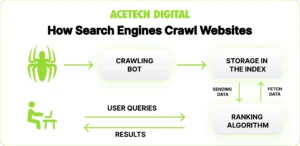
Search engines use automated bots called crawlers to explore the internet. These bots travel from page to page by following links, systematically cataloging the information they find. The process of link discovery allows them to build a massive index of the web. You can learn more about how this works directly from Google Search Central or through industry resources like Moz.
The routes these bots take are known as crawl paths. If your site has clear paths, bots can easily find every important page. If the paths are broken or too complex, bots might leave before they index your most valuable content.
What Crawlers Look For
Crawlers primarily look for internal links and clear content relationships. They want to see how one article connects to another. By analyzing these connections, they determine which pages hold the most value. Proper linking strategies ensure bots understand your most critical topics, as discussed in our keyword research guide.
Why Crawl Paths Matter
Crawl paths matter because they dictate page depth and link accessibility. Page depth refers to the number of clicks required to reach a specific URL from the homepage. Important pages should be easily accessible within a few clicks. Keeping vital URLs close to the surface is a key part of any technical SEO checklist.
Flat vs Deep Website Architecture
Webmasters generally choose between two main types of site organization: flat architecture and deep architecture. A flat structure keeps every page just a few clicks away from the homepage. It spreads out horizontally, making content highly visible.
A deep architecture forces users to click through multiple layers of categories and subcategories to find what they need. While this might seem necessary for massive sites, it often causes indexing problems and frustrating user experiences.
What Is Flat Website Structure
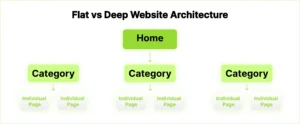
Flat website structure promotes fast crawling and better authority flow. Because pages sit closer to the homepage, search bots can index them quickly. The link equity from the main domain spreads evenly to the supporting pages, boosting their ability to rank well.
Problems With Deep Structures
Deep structures frequently result in orphan pages and hidden content. An orphan page has no internal links pointing to it, making it nearly impossible for crawlers to find. When content gets buried six or seven clicks deep, search engines assign it very little value. Finding and fixing these issues is a major step in our website audit guide.
How Website Structure Impacts Rankings
Website structure directly impacts rankings by distributing ranking signals and internal link authority throughout your domain. When a high performing page links to a newer article, it passes a portion of its trust and authority to that new URL. This transfer of trust helps newer content rank faster.
A well planned layout ensures that your most profitable pages receive the most internal links. By intentionally directing authority to specific areas, you tell search engines exactly which URLs you want them to prioritize in search results.
Internal Authority Flow
Internal authority flow refers to the way link equity moves through your site. Pages with high traffic and external backlinks accumulate authority. When these strong pages link to other sections of your site, they share that equity, lifting the overall performance of your entire domain.
Why Important Pages Need More Links
Important pages need more links because search engines treat internal links as votes of confidence. If you want your SEO services page to rank well, you must point plenty of internal links toward it. The more links a page receives, the more important it appears to search algorithms.
How Service Businesses Should Organize Pages
Service businesses need structured pages to attract local customers and explain their offerings clearly. A disorganized site confuses potential clients and drives them away. By creating dedicated spaces for each service and location, businesses can capture highly specific search traffic.
Organizing these pages effectively involves creating a clear parent and child relationship. The main services menu acts as the parent, while the specific offerings and city pages act as the children. This logical grouping makes navigation simple for both users and search bots.
Service Pages Structure
Service pages should be separated into distinct categories rather than lumped onto one single page. For example, you should have one dedicated page for SEO services and a completely separate page for Web design services. This separation allows you to optimize each page for its specific topic.
Location Pages Structure
Location pages help businesses capture local search traffic in specific areas. If you serve multiple cities, you need individual pages for each region. Creating a Dallas TX page and a separate Plano TX page allows you to target local keywords effectively and build relevance for those specific communities.
Blog Content Supporting Services
Blog content should directly support your main service pages. When you write informative articles, you build trust and educate your audience. For instance, publishing a comprehensive content marketing guide naturally supports your marketing service pages by proving your expertise on the subject.
The Role of Internal Linking
Internal linking acts as the glue that holds your website structure together. A strong internal linking strategy connects related topics and guides users through their journey. It transforms a collection of random articles into a cohesive resource.
These links also help establish a hierarchy of importance. When you strategically place links in your menus, footers, and content body, you control how link equity flows and how easily visitors can find what they need.
Contextual Links Inside Content
Contextual links sit inside the main body of your articles. They provide readers with opportunities to learn more about specific terms. For example, linking to a post about keyword research strategies within a broader marketing article adds value and keeps users engaged.
Navigation Links
Navigation links appear in your main menu and sit at the top of every page. These links point to the most critical areas of your site, such as your Homepage, your services, and your contact information. They provide a constant roadmap for your visitors.
Footer Links
Footer links sit at the very bottom of your website. They typically house support pages, privacy policies, terms of service, and secondary navigation options. While they pass less authority than main menu links, they remain essential for user experience and site completeness.
How Blog Content Supports SEO Structure
Blog content does more than just attract casual readers. Blogs support services by answering common questions and capturing top of funnel search traffic. When visitors find helpful answers on your blog, they become more likely to explore your paid offerings.
By organizing your blog effectively, you create a massive web of relevance. Each article acts as an entry point for search engines, bringing in fresh traffic and passing authority to your core business pages.
Informational Content
Informational content targets users who are researching a problem but are not quite ready to buy. Writing an in-depth long tail keywords guide helps capture these researchers early in their journey, building brand awareness and trust before they even need a service.
Educational Guides
Educational guides provide comprehensive instructions on complex topics. A detailed content marketing strategy guide showcases your deep industry knowledge. These massive resources attract backlinks from other websites, increasing the overall authority of your domain.
Website Structure and Topical Authority
Topical authority occurs when search engines recognize your site as a leading expert in a specific field. You build this authority by publishing extensive content about a single subject and linking it together using topic clusters.
Topic clusters organize your site into distinct hubs of information. By grouping related articles together, you prove to search algorithms that you have covered every possible angle of a subject, making your site a highly trusted resource.
Content Clusters
Content clusters start with a central pillar page that provides a broad overview of a subject. This main hub then links out to dozens of smaller, highly specific articles. You can see how this works by checking out our Blog reference on cluster strategies.
Building Topic Depth
Building topic depth requires publishing multiple related blogs that answer every conceivable question about your industry. As you add more detailed articles to your cluster, your topical authority grows, making it easier to rank for highly competitive keywords.
Website Navigation Best Practices
Clear navigation is crucial for keeping visitors on your site. If users cannot figure out your menu within a few seconds, they will leave. You must design your navigation to be intuitive, clean, and highly organized, ensuring that visitors can reach their desired destination with minimal effort.
Main Menu Structure
Your main menu structure should be simple and direct. It typically includes links to your services, your blog, your locations, and a way to contact your business. Avoid cluttering the main menu with too many dropdown options, as this can overwhelm users.
Category Organization
Category organization applies primarily to your blog and ecommerce products. Creating clear blog categories helps readers sort through hundreds of articles to find exactly what they want. Logical grouping prevents older content from getting lost in the archives.
Common Website Structure Mistakes
Many businesses unintentionally harm their search visibility by making common organizational errors. These mistakes confuse search algorithms and create frustrating experiences for human visitors.
Too Many Click Levels
Forcing users to click five or six times to find a service page destroys user experience. Search bots also struggle to crawl pages buried this deep. Always aim to keep your most important content within three clicks of the homepage.
Orphan Pages
Orphan pages have absolutely no internal links pointing to them. Because crawlers navigate via links, they cannot find or index these isolated URLs. Regularly auditing your site helps you identify and connect these lost pages.
Duplicate Content Paths
Duplicate content paths occur when multiple URLs lead to the exact same information. This confuses search engines, forcing them to guess which version to rank. Proper URL structure and canonical tags help resolve these duplicate issues quickly.
Website Structure for Large Websites
Large websites with thousands of pages face unique structural challenges. Managing massive ecommerce stores or national directories requires strict adherence to hierarchy rules. Without a solid framework, large sites quickly become chaotic and difficult to crawl.
For businesses operating on a national scale, organizing city pages and service pages logically becomes a top priority. A well planned architecture ensures that local pages do not compete with each other in search results.
Scaling Content Properly
Scaling content properly means adding blogs and new pages without breaking your existing architecture. You must have a system in place to categorize new articles automatically, ensuring they immediately connect to the rest of your site.
Supporting Thousands of Location Pages
Supporting thousands of location pages requires a dynamic linking strategy. Linking relevant blogs directly to the appropriate City page passes regional authority and helps those local pages rank higher for geographical search terms.
Website Structure and User Experience
Website structure and user experience go hand in hand. Search engines track UX signals, such as how long people stay on your site and how many pages they view. A logical layout encourages visitors to click around and read more content.
If your site looks messy, visitors will bounce back to the search results. High bounce rates signal to search engines that your site did not satisfy the user, which can negatively impact your rankings over time.
Navigation Clarity
Navigation clarity ensures that labels accurately describe the content behind the link. Avoid using clever or ambiguous names for your menu items. Clear, descriptive labels help users feel confident about where they are clicking.
Content Discovery
Content discovery refers to how easily users find related information. Adding related post widgets and internal links at the bottom of your articles encourages readers to continue exploring your site, significantly improving their overall experience.
How Website Structure Supports AI Search Results
As artificial intelligence transforms search engines, proper organization becomes even more critical. AI Overviews and Answer Engine Optimization rely heavily on structured content to generate accurate summaries.
AI tools need to understand context to provide good answers. A well organized site provides the clear context these models require, making it much more likely that your brand will be featured in AI generated search summaries.
Why Clear Page Relationships Matter
Clear page relationships matter because AI models understanding content rely on connections. When an AI analyzes your domain, it looks at how topics relate to one another. Strong connections help the AI verify your expertise and use your data in its responses.
Content Signals for AI Search
Content signals for AI search include clear structure, accurate headings, and verified authority. By organizing your data logically, you make it incredibly easy for machine learning algorithms to process your information and present it to users.
Future of SEO and Website Structure
The future of search is evolving rapidly, but the need for a solid foundation remains constant. As algorithms become smarter and more capable of understanding human intent, they will continue to reward websites that prioritize logical organization and accessibility.
Businesses that invest in their site architecture today will build a massive competitive advantage. As new technologies emerge, a clean and scalable framework will allow these sites to adapt quickly and maintain their search visibility.
Final Thoughts
The importance of a logical website structure cannot be overstated. It serves as the roadmap for search engines and the foundation for your users. By focusing on clear hierarchy and strong internal linking, you create a digital environment where your content can truly thrive.
A scalable content framework ensures that your business can grow without technical limitations. Take the time to audit your current architecture, fix broken paths, and organize your pages effectively. These structural improvements will yield significant benefits for your search performance for years to come.